
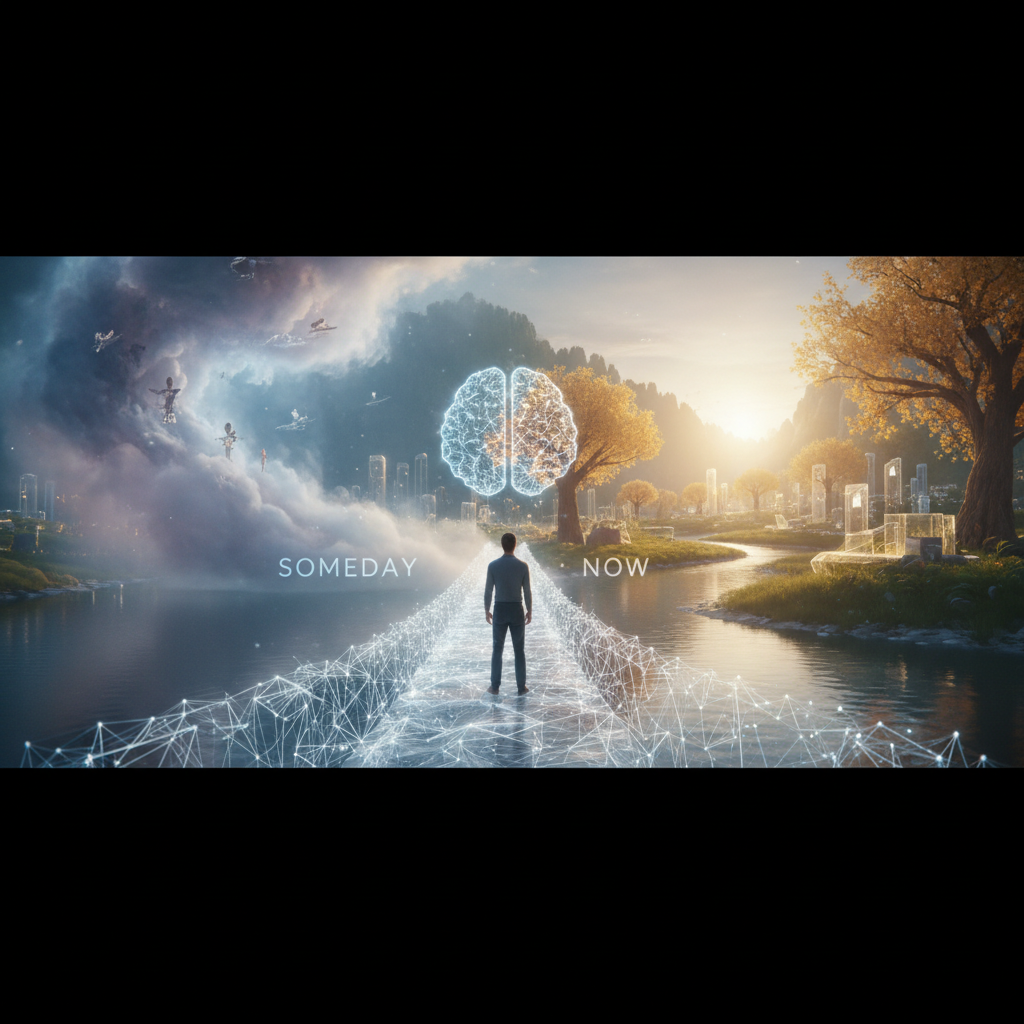
We’ve all heard the advice: set clear goals. But what does "clear" really mean when we're talking about the inner landscape of our aspirations? For many, it translates to a bulleted list, a mission statement, or perhaps a vision board filled with aspirational images. While these tools have their place, there's a deeper, more primal language our brains respond to: the vivid, present-tense dream scene.
The Brain's Preference for Sensory Detail
Think about the last time you truly anticipated something wonderful – a long-awaited vacation, a special meal, or a significant achievement. Your mind likely didn't just register the words "beach holiday." Instead, you probably felt the warm sand between your toes, heard the distant crash of waves, smelled the salty air, and saw the sun setting over the horizon. This isn't just daydreaming; it's your brain engaging in a sophisticated form of mental rehearsal.
Studies in cognitive neuroscience and sports psychology have consistently shown the power of mental imagery. Athletes, musicians, and performers often achieve higher levels of success when they meticulously visualize their performance, not just as a concept, but as a full-sensory experience. They don't just think, "I want to win"; they feel the tension in their muscles, hear the roar of the crowd, see themselves executing each move flawlessly. This kind of detailed mental practice primes the neural pathways, making the actual execution smoother and more automatic.
Abstract goals, while intellectually sound, often lack this visceral connection. "I want to be financially secure" is a worthy aspiration, but it doesn't offer the brain much to latch onto. It's like giving a painter a vague instruction to "paint something nice" instead of describing the exact scene, colors, and mood you envision.
Crafting Your "Now" Scene
The key differentiator between a vague goal and an effective dream scene lies in its immediacy and sensory richness. Instead of future-tense wishes, we're inviting our brains to experience the desired outcome as if it's happening right now. This isn't about delusion; it's about leveraging the brain's inability to fully distinguish between a vividly imagined experience and a real one. When you describe your desired reality in the present tense, with all its sensory components, your brain begins to treat it as an existing reality, fostering a sense of familiarity and possibility.
Consider the difference:
* Abstract Goal: "I want to feel more confident at work."
* Dream Scene: "I am standing tall in the meeting, my voice clear and steady as I present my ideas. I see my colleagues nodding in agreement, and I feel a warm sense of calm self-assurance radiating through me. The air smells faintly of coffee, and the sunlight streams through the window."
Notice how the dream scene immediately pulls you in. It provides anchors for your emotions and senses. This isn't just about 'what' you want, but 'how' it feels, sounds, looks, and even smells when you have it.
The Emotional Anchor: Beyond Sight and Sound
While visual and auditory details are crucial, don't underestimate the power of emotional anchoring. How does your desired reality feel? Is it joy, peace, excitement, contentment, or a profound sense of purpose? Integrating these emotions into your dream scene amplifies its impact. When you replay a scene that evokes genuine positive emotions, you're not just remembering; you're re-experiencing. This emotional resonance makes the scene more memorable and more compelling to your subconscious mind.
This is also where the act of speaking your dream scene aloud, in your own voice, adds another layer of power. Hearing yourself describe your desired reality in the present tense creates a deeper imprint. It's an active declaration, not just a silent thought. And when you engage in this practice consistently, perhaps even daily, you are continually reinforcing those neural pathways, making the envisioned future feel more and more like an inevitable present.
The Gentle Reinforcement of Replay
Life is busy, and even the most vivid dream scenes can fade without regular reinforcement. This is why a consistent, gentle replay practice is so effective. It’s not about forcing an outcome, but about tending to your inner garden, watering the seeds of your intentions. Each time you bring your present-tense dream scene back into focus – through your own voice, through quiet contemplation, or through sharing with a supportive community – you're strengthening its roots. You're reminding your brain of the path it's already on, making the journey towards that vibrant reality feel less like a struggle and more like a natural unfolding.
Ultimately, the brain isn't interested in abstract concepts of 'someday.' It thrives on the rich, multi-sensory data of 'now.' By giving it detailed, present-tense dream scenes, emotionally anchored and consistently revisited, we're speaking its language, and in doing so, unlocking a powerful capacity for shaping our own realities.