
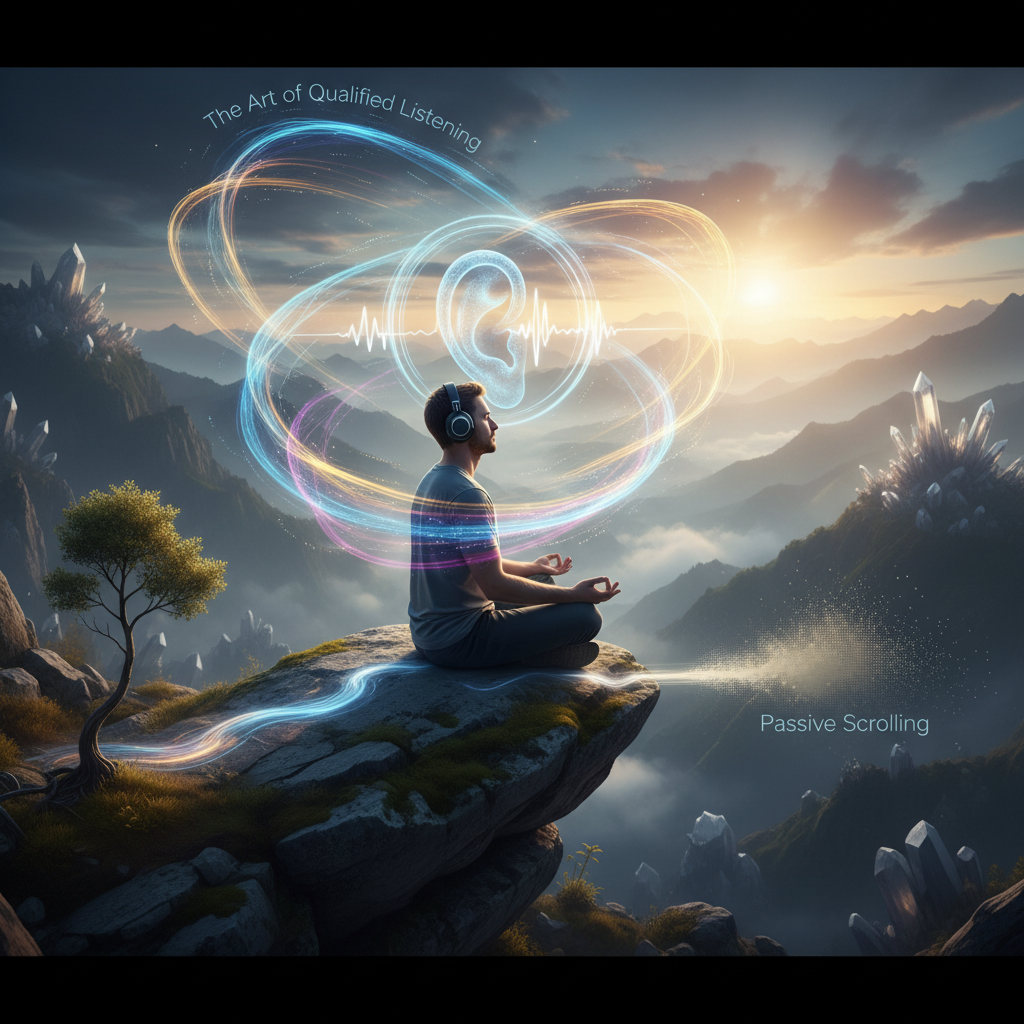
We live in an era of unprecedented information flow. Our screens constantly vie for our attention, offering an endless stream of content. From news feeds to social updates, the digital world hums with a relentless, often uninvited, soundtrack. This constant input, while sometimes informative, often leads to a state of 'passive scrolling' – a form of digital consumption that, despite its ubiquity, offers little in the way of meaningful engagement or personal growth.
But what happens when we shift from passively absorbing external noise to actively and intentionally listening to our own inner voice, particularly when that voice is articulating our aspirations in the present tense? This is where the profound difference between noise and ritual, between mere attention and qualified listening, truly emerges.
The Shallow Waters of Passive Consumption
Think about your typical scrolling session. You might glide through dozens of posts, images, and headlines. Information washes over you, momentarily capturing your gaze before dissolving into the next item. This isn't listening; it's a form of visual and cognitive skimming. Our brains are designed to filter and categorize, but when faced with an overwhelming, unstructured torrent, the depth of processing remains superficial. We might feel 'informed' or 'connected,' yet often, a sense of mental fatigue or even emptiness can follow.
This passive absorption doesn't cultivate attention quality. Instead, it fragments it. Our focus jumps from one stimulus to another, rarely settling long enough to truly integrate or reflect. For anyone interested in manifestation or mindful goal practice, this scattered state is counterproductive. Manifestation, at its core, involves focused intention and consistent mental rehearsal – practices that demand a different quality of attention entirely.
The Deep Dive of Intentional Replay
Now, contrast this with the act of intentionally replaying a personal, present-tense dream scene recorded in your own voice. This is not passive. This is 'qualified listening' – an active, deliberate engagement with content that you yourself have created, for your own specific purpose.
When you hear your own voice articulating a desired outcome as if it's already happening – "I am feeling vibrant and energized as I complete my morning run," or "My creative project is flowing effortlessly today" – something distinct occurs. Your brain isn't just processing external data; it's engaging with an internal blueprint. Studies on mental rehearsal and self-talk suggest that when we vividly imagine or articulate desired states, especially in the present tense, we activate neural pathways akin to actually experiencing those states. This is more than just positive thinking; it's a form of cognitive programming.
Ritual vs. Noise: The Power of Deliberate Engagement
The difference here lies in the intention and the ritual. Passive scrolling is akin to standing in a noisy marketplace, overwhelmed by competing sounds. Intentional replay, on the other hand, is like stepping into a quiet room and listening to a carefully composed piece of music, chosen specifically for its resonance with your inner world.
* Attention Quality: With intentional replay, your attention isn't fragmented; it's concentrated. You're not reacting to external stimuli; you're actively absorbing and integrating internal data. This focused attention strengthens neural connections related to your goals.
* Qualified Listening: This isn't just hearing; it's understanding, feeling, and internalizing. When you listen to your own voice, there's an inherent trust and intimacy that external voices often lack. It bypasses the critical filters we often apply to outside information, allowing the message to land more deeply.
* Ritual, Not Noise: Incorporating such a replay into your daily routine transforms it from a sporadic activity into a ritual. Rituals provide structure, predictability, and a sense of purpose. They signal to your brain that this moment is important, setting the stage for deeper engagement and reinforcing the desired outcome over time. This consistent, gentle repetition is far more impactful than fleeting, noisy exposure.
In essence, while passive scrolling floods your mind with external noise, intentional replay cultivates a mindful garden within. It's about choosing to listen to the whispers of your own aspirations, giving them the focused attention they deserve, and allowing them to take root and flourish in the fertile ground of your conscious and subconscious mind. It's a deliberate act of self-authorship, turning fleeting thoughts into tangible mental architecture, one mindful listen at a time.