
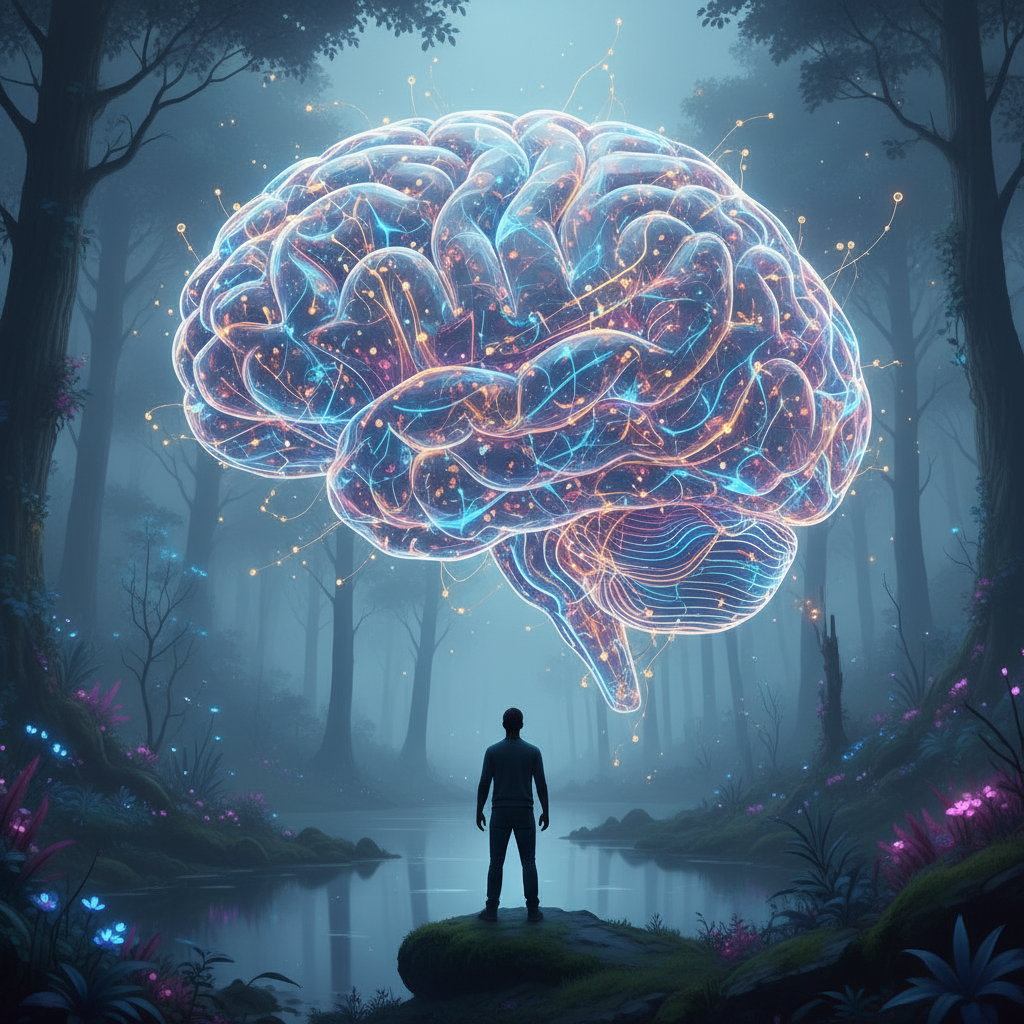
We often talk about the power of positive thinking or setting intentions, but how does our brain actually translate these intangible concepts into tangible shifts in our experience? The science points to a profound mechanism: repetition. It's not just about what we think, but how often, and in what form, we engage with those thoughts.
The Neuroplasticity Primer: Your Brain, a Dynamic Landscape
At the heart of this phenomenon is neuroplasticity – the brain's remarkable ability to reorganize itself by forming new neural connections throughout life. Think of your brain not as a fixed, unchangeable structure, but as a dynamic landscape, constantly being sculpted by your experiences, thoughts, and actions. Every time you learn a new skill, recall a memory, or even entertain a thought, you're subtly reshaping your brain's architecture.
When we repeatedly engage with a particular thought, image, or sound, we strengthen the neural pathways associated with it. Imagine a well-worn path through a field versus a barely trodden one. The more you walk a path, the clearer and easier it becomes to navigate. Similarly, the more you 'walk' a neural pathway, the more efficient and automatic that thought or response becomes. This is why habits, both good and bad, can feel so automatic – they've become deeply etched into our neural circuitry.
Mental Rehearsal: Athletes, Musicians, and Everyday Dreams
This principle isn't just theoretical; it's a cornerstone of high performance across various fields. Studies on mental rehearsal, also known as motor imagery or visualization, have consistently shown its effectiveness. Athletes, for instance, don't just train physically; they spend significant time mentally rehearsing their routines, visualizing every movement, every sensation, every successful outcome. Research indicates that this mental practice can activate the same brain regions as actual physical practice, leading to measurable improvements in performance.
Musicians mentally play complex pieces, imagining each note and finger placement. Surgeons mentally walk through intricate procedures. These aren't just idle daydreams; they are deliberate, focused acts of internal rehearsal that prime the brain and body for actual execution. The brain, in a sense, can't always tell the difference between a vividly imagined experience and a real one, and this blurring of lines is precisely where the power of repetition lies.
What's particularly interesting for our exploration is the role of auditory rehearsal. When you hear something repeatedly – especially in your own voice – it adds another layer of sensory input to the mental blueprint. Auditory cues can be incredibly powerful memory triggers and can deepen the emotional resonance of a visualized scene. When you articulate a desired future state in the present tense, you're not just thinking about it; you're experiencing it through your own internal narration, further solidifying those neural pathways.
Consistency Over Intensity: The Gentle Nudge That Transforms
Here's a crucial insight from the science: consistency often trumps intensity. While a single, intensely focused visualization session can be impactful, it's the sustained, gentle repetition over time that truly rewires the brain. Think of it like erosion – a single downpour might cause some immediate change, but the steady drip of water over years can carve canyons.
Daily, brief engagements with a desired scene or feeling are often more effective than sporadic, hours-long sessions. This is because consistency keeps those neural pathways active and reinforces them regularly. It's about creating a consistent 'signal' in the brain, rather than a fleeting 'noise.'
When we engage with present-tense scenes, perhaps through voice replay or daily reminders, we're not just wishing for something; we're actively constructing an internal reality. We're telling our brain, over and over, 'This is happening. This is my reality.' And as those neural pathways strengthen, our perceptions, our behaviors, and ultimately, our experiences begin to align with that consistently rehearsed internal narrative.
It's a subtle, yet profound, dance between mind and matter. By understanding the science of repetition and neuroplasticity, we gain a deeper appreciation for the quiet, consistent work of shaping our inner world – work that ultimately manifests in the world around us. It's not magic; it's the beautiful, intricate machinery of the human brain at work, responding to the consistent cues we provide it.