
# Why Your Dream Scenes Need Detail: The Brain’s Love for Specificity
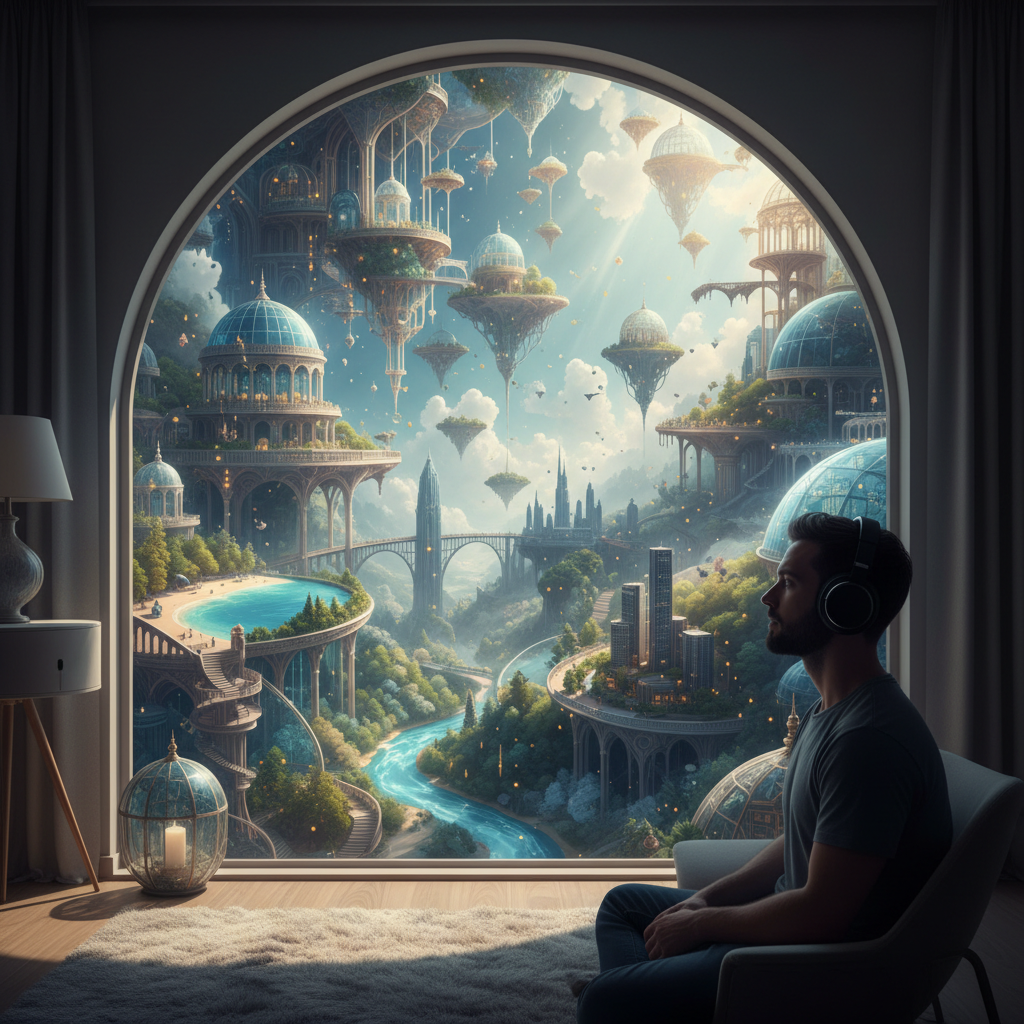
Many of us start a new goal with a vague idea: “I want to be healthier,” “I want a promotion,” or “I want more creativity.” These broad statements are easy to say but hard for the brain to act on. In contrast, a well‑crafted dream scene—an imagined, present‑tense moment filled with sights, sounds, smells, and feelings—creates a concrete neural map that can guide everyday action.
The Neuroscience of Specificity
Research in cognitive neuroscience shows that the brain treats imagined actions similarly to real ones. When you vividly rehearse a task, motor‑planning areas light up just as they do during actual performance. This shared circuitry is the basis for mental rehearsal, a technique used by athletes, musicians, and surgeons to improve skill.
Specificity matters because it increases the fidelity of that rehearsal. A vague goal, such as “exercise more,” activates general “movement” regions but leaves the brain without a clear route. A detailed scene—“I’m at a bright, airy studio, feeling the cool air on my skin, hearing the rhythmic hum of a treadmill, and Waar the finish line in the distance”—triggers a cascade of sensory and emotional signals that reinforce the desired behavior.
끓
Sensory Richness and Emotional Anchoring
The brain’s memory systems are highly tuned to multisensory input. When a scene includes visual detail, tactile sensations, auditory cues, and even olfactory or gustatory elements, it creates a dense web of associations. Studies on episodic memory show that richer sensory encoding leads to stronger recall and better transfer to real‑world actions.
Emotion is the glue that holds a scene together. A scene that feels safe, excited, or proud is more likely to motivate the brain to seek the same state again. When you record a dream scene in your own voice, you add a personal emotional layer that is hard to replicate with a generic mantra. The voice becomes an anchor, reminding you of the feelings you experienced when you first imagined the scene.
Present‑Tense Scenes as Mental Rehearsal
One common pitfall is to speak of goals in the future tense: “I will…”. Shifting to the present tense—“I am…”—aligns the imagined scene with the brain’s default mode of processing current reality. The brain is wired to understand the present, so it treats a present‑tense scene as a real, ongoing event.
When you replay a recorded dream scene daily, you effectively rehearse the desired state. Neuroscience on “practice effect” indicates that repeated activation of the same neural pathways consolidates them into stronger, more automatic patterns. Over time, the brain begins to respond to external triggers (like a phone notification or a glance at a calendar) by nudging you toward the actions that reinforce the scene.
Community and Shared Scenes
Many people find that sharing their scenes with a like‑minded community adds a layer of accountability and inspiration. Hearing others’ vivid stories can spark new sensory details and emotional angles you hadn’t considered. The shared practice of listening to each other’s recordings—often in the present tense—creates a collective rehearsal that can influence individual neural pathways. It’s a gentle reminder that you’re not alone in the journey.
Practical Tips for Crafting Specific Dream Scenes
1. Start with a clear intention. Decide on a single, achievable outcome you want to feel like you already have.
2. Paint the setting in three dimensions. Where are you? What does the space look like? What sounds surround you?
3. Add tactile and olfactory cues. Describe textures you touch and scents you smell. These details deepen neural encoding.
4. Infuse emotion. Choose one core feeling—joy, calm, pride—and let it color the whole scene.
5. Record in your own voice. Hearing your own words adds authenticity and emotional resonance.
6. Practice daily. A short, repeated playback creates a rehearsal loop that the brain can latch onto.
7. Review and refine. As you progress, tweak sensory details or emotional tone to keep the scene fresh and relevant.
A Gentle Reminder
Visualization is not magic; it is a science‑based tool that leverages the brain’s natural learning mechanisms. By turning abstract goals into detailed, present‑tense dream scenes, you give your mind a clear, actionable map. The more vivid and emotionally grounded the scene, the stronger the neural pathways that support the desired behavior.
If you’re curious about how to bring your future into clearer focus, try recording a short scene that feels like you already are living that reality. Listen to it each day, and notice how the brain begins to shift from intention to action.
---
If you find this practice helpful, consider sharing your scenes with a community of like‑minded listeners. The collective replay can amplify the effect of each individual rehearsal.