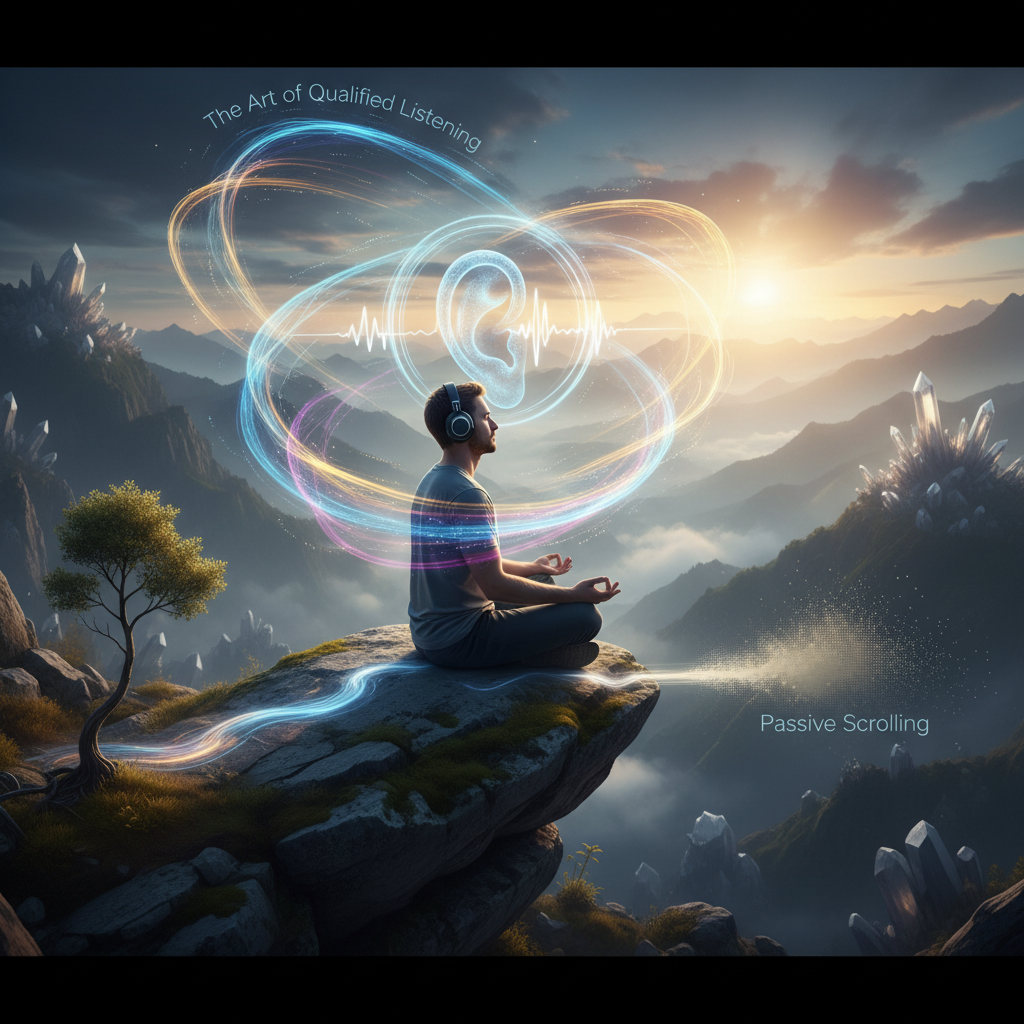

We often think of our inner aspirations as deeply personal, a private monologue playing out in the theater of our minds. And to a significant degree, they are. Yet, there's a unique power in hearing how others articulate their own desired realities, a form of communal learning that can subtly but profoundly shape our individual journeys.
The Unspoken Lexicon of Lived Experience
Think about learning a new skill – perhaps a craft or a musical instrument. While individual practice is paramount, observing a master at work, listening to their techniques, or even just hearing their completed pieces, offers a rich vocabulary beyond mere instruction. It’s not about imitation, but about absorbing the nuances, the rhythm, the emotional texture that informs their expression.
Similarly, when we engage with the present-tense dream scenes of others, we’re not just hearing their specific goals; we’re exposed to the language they use to describe them. We hear how they embody feelings, how they paint sensory details, how they frame their desired outcomes as already-achieved realities. This isn't about adopting their dreams wholesale, but about expanding our own linguistic toolkit for articulating our unique visions.
Consider the subtle differences in how someone might describe a feeling of 'peace':
* "I am breathing deeply, the quiet hum of the morning around me." (Sensory, present moment)
* "I am feeling a profound sense of calm, knowing all is well." (Emotional, internal state)
* "I am effortlessly navigating my day, a serene confidence guiding my steps." (Action-oriented, embodied)
Each phrasing offers a different lens, a new way to articulate an internal state. By listening to a variety of these expressions, we might discover words or phrases that resonate deeply with our own nascent feelings, helping us to give form and voice to what was previously unarticulated.
Social Proof Without Comparison
One common pitfall in social interaction is the tendency towards comparison, often leading to feelings of inadequacy or envy. However, the kind of community learning we're discussing here operates on a different plane. It's about 'social proof' in the most positive sense: witnessing the shared human impulse to grow, to create, to manifest.
When you hear others confidently declaring their present-tense scenes, it subtly reinforces the idea that this practice is valid, that it's a worthwhile endeavor. It normalizes the act of envisioning a desired future, making it feel less like a solitary, quirky habit and more like a shared human pursuit. This isn't about comparing your 'success' to theirs, but about feeling a sense of belonging in a collective striving for self-improvement and positive change.
This communal resonance can be a powerful motivator. It's the quiet understanding that others are also engaging in similar mental rehearsals, shaping their inner worlds. This shared motivation, without the pressure of direct competition, can bolster your own commitment and creativity in crafting your scenes.
The Remix Culture of Aspiration
In the digital age, 'remix culture' describes the act of taking existing creative works and transforming them into something new. While we’re not suggesting you literally remix someone else’s dream, there's a conceptual parallel here. You might hear a particular turn of phrase or a descriptive element in someone else's scene that sparks an idea for your own.
Perhaps someone describes the 'golden light' filtering through their window, and suddenly you realize that adding a visual detail like 'the scent of fresh-baked bread' could elevate your scene about a peaceful morning. Or you might hear someone articulate a feeling of 'unwavering focus' and realize that this specific phrasing resonates more deeply with your own desire for concentration than your previous, more generic terms.
This isn't appropriation; it's inspiration. It's the organic process of learning from a diverse pool of human expression, allowing those insights to enrich your personal language and deepen your connection to your own aspirations. It expands your internal dictionary, giving you more precise and evocative tools to sculpt your mental blueprints.
Ultimately, engaging with the manifest scenes of others isn't about finding a template to copy, but about discovering new colors for your own palette. It’s about recognizing the universal threads of human aspiration while honing the unique tapestry of your individual journey. Through shared listening, we don't just find inspiration; we refine our own voice, making our internal narratives more vibrant, more precise, and more powerfully our own.