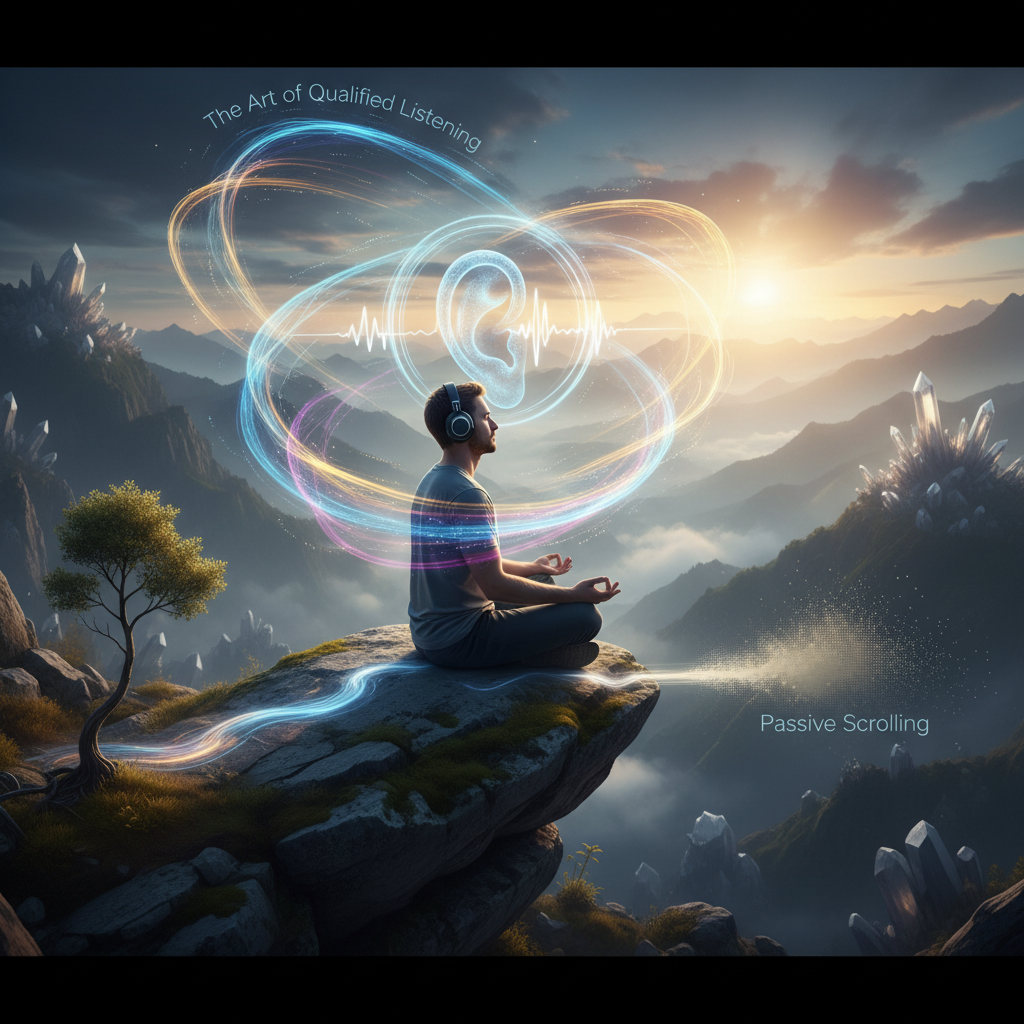

The human brain is a marvel of adaptability, a dynamic landscape constantly being sculpted by our experiences, thoughts, and even our imaginings. This remarkable capacity is often referred to as neuroplasticity – the brain's ability to reorganize itself by forming new neural connections throughout life. It’s a concept that underpins much of what we understand about learning, habit formation, and even recovery from injury.
When we talk about bringing desired futures into being, whether through mindful goal practice or what some call 'manifestation,' we’re often tapping directly into these neuroplastic principles. It’s not magic, but rather a sophisticated interplay of attention, intention, and, crucially, repetition. The quiet, consistent act of revisiting a mental scene or an auditory cue can be far more potent than occasional, high-intensity bursts of effort.
The Brain's Rehearsal Stage
Think of your brain as a highly sophisticated rehearsal space. When you mentally practice an action – say, a complex piano piece, a challenging speech, or even a serene walk on a beach – your brain lights up in ways remarkably similar to when you're actually performing that action. This phenomenon, known as mental rehearsal or motor imagery, has been extensively studied across various disciplines.
In sports psychology, for instance, athletes frequently use mental rehearsal to improve performance. They visualize every detail: the feel of the ball, the trajectory of a shot, the sound of the crowd, the sensation of crossing the finish line. Studies have shown that consistent mental practice can lead to measurable improvements in physical skills, even without physical movement. This isn't just about 'thinking positively'; it's about activating the same neural pathways that would be engaged during the actual performance. The brain doesn't always differentiate between a vividly imagined experience and a real one, especially when the imagination is rich in sensory detail – sights, sounds, feelings, even smells.
Similarly, auditory rehearsal plays a powerful role. Hearing your desired future state described in the present tense, in your own voice, repeatedly, creates a deeply personal and resonant experience. It’s not just an external suggestion; it’s an internal affirmation, a self-generated blueprint. When you hear yourself say, “I am feeling calm as I navigate this new challenge,” or “I am enjoying the vibrant energy of my creative work,” you’re not just listening to words. You’re engaging your auditory cortex, linking these sounds to the emotional and cognitive networks associated with those very states. This internal narrative, consistently reinforced, begins to feel less like a wish and more like an unfolding reality.
Consistency Over Intensity: The Gentle Nudge
Here's where the principle of consistency truly shines. While a single, intensely focused visualization session might offer a temporary boost, it's the gentle, daily nudge that truly reshapes the neural landscape over time. Imagine trying to carve a path through a dense forest. A single, powerful swing of an axe might clear a small patch, but it's the consistent, daily clearing of undergrowth that eventually creates a well-trodden, easily navigable trail.
Our brains are wired for efficiency. The more frequently a neural pathway is activated, the stronger and more efficient it becomes. This is the essence of habit formation. When you consistently engage in mental and auditory rehearsal of your desired scenes, you are, in essence, creating and strengthening the neural pathways that support those realities. You're making it easier for your brain to recognize and respond to opportunities that align with your envisioned future.
This isn't about 'forcing' an outcome; it's about priming your cognitive and emotional systems to be attuned to it. It’s about cultivating an internal environment where your desired future feels familiar, comfortable, and attainable. The daily, brief replay of a present-tense scene, spoken in your own voice, isn't just a reminder; it's a gentle, persistent training session for your brain.
Building Your Inner Narrative
So, what does this mean for our daily practice? It underscores the value of short, clear, present-tense scenes that you can revisit often. It highlights why your own voice is such a potent tool – it bypasses external filtering and speaks directly to your deepest self. And it reaffirms that the power isn’t in the grand, infrequent gesture, but in the quiet, consistent commitment.
* Specificity Matters: The more detailed and sensory-rich your imagined scene, the more effectively your brain can engage with it.
* Present Tense Power: Framing your desired state as already happening bypasses future-oriented doubt and anchors the experience in your current reality.
* Your Voice as Guide: Hearing your own voice articulate your desired scenes creates a powerful, personalized feedback loop.
By understanding these fundamental principles of neuroplasticity and the impact of repeated visualization and auditory rehearsal, we can approach our mindful goal practices with greater intention and patience. It’s a journey of gentle, consistent whispers, guiding your brain to build the realities you envision, one repetition at a time.